Third party payment
What is third-party payment?
Third-party payment is an electronic payment service provided by a third-party institution that is independent of both parties to the transaction. It helps consumers and merchants complete the transfer of funds. It is usually used in online transactions.
How it works
The third-party payment platform acts as an intermediary in the transaction. Consumers pay through the platform, and the funds are temporarily stored in the platform. After the transaction is confirmed, the money is transferred to the merchant to ensure transaction security.
Common functions
- Online payment: Support credit card, debit card or bank transfer.
- Fund custody: ensuring transaction security for buyers and sellers.
- Cross-border payment: Supports settlement in multiple currencies to facilitate international transactions.
- E-Wallet: Users can store funds for daily payments or transfers.
Advantages
- Simplify the payment process and improve transaction efficiency.
- Reduce transaction risks and provide security.
- Support multiple payment methods to improve convenience.
- Promote the popularity of micropayments and e-commerce.
Common platforms
Globally, common third-party payment platforms include PayPal, Stripe, Apple Pay, and Google Pay; in Chinese areas, there are Alipay and WeChat Pay.
Insurance
insurance definition
Insurance is a risk management tool. Through the policyholder's payment of insurance premiums, the insurance company provides financial compensation and alleviates losses or burdens when specific accidents or circumstances occur.
Types of insurance
Insurance can be divided into the following main types:
- Personal insurance:Including life insurance, health insurance, injury insurance, etc., to protect personal life and health risks.
- Property insurance:Including fire insurance, automobile insurance, residential insurance, etc., to protect the risk of property loss.
- Liability insurance:For example, third-party liability insurance protects the insured against legal liability for economic losses.
insurance function
- Financial security:Provide financial support when accidents or losses occur to ensure basic life stability.
- Risk sharing:Through the insurance system, individual risks are spread to the collective, reducing individual burdens.
- Fund use:Insurance companies invest premiums to support economic development.
Basic principles of insurance
The insurance system operates according to the following principles:
- The principle of utmost good faith:The policyholder must honestly inform relevant information, and the insurance company must perform the contract fairly.
- Loss compensation principles:The purpose of insurance is to compensate for losses, not to make profits.
- Allocation principle:Insurance companies spread risks among many policyholders, sharing potential losses.
Things to note when buying insurance
- Confirm your own needs and choose the appropriate insurance product.
- Read the policy terms carefully to understand the coverage and exclusions.
- Compare the products and services of different insurance companies and choose one with a good reputation.
- Pay premiums on time according to the contract to avoid interruption of protection.
insurance benefits
- Provide risk protection to reduce the impact of unexpected losses on life.
- Assist individuals and families with financial planning and goals.
- Promote social stability and economic development.
climate insurance
Definition of climate insurance
Climate insurance is an insurance product specifically designed to address risks related to climate change. It is used to compensate for economic losses caused by extreme weather events (such as typhoons, floods, droughts, etc.), help disaster victims reduce their financial burden, and accelerate post-disaster recovery.
Main types of climate insurance
- Agricultural climate insurance:Provides coverage against losses to crops or livestock due to extreme weather.
- Weather index insurance:Based on specific meteorological parameters (such as rainfall, temperature, etc.), compensation is paid when predetermined indicators are reached.
- Natural Disaster Insurance:Provide property or life protection against extreme weather disasters such as earthquakes, typhoons, and floods.
The importance of climate insurance
- Addressing the growing risk of natural disasters posed by climate change.
- Protect the livelihoods and financial stability of high-risk groups such as farmers and fishermen.
- Support governments and enterprises to disperse financial pressure and strengthen disaster recovery capabilities.
How climate insurance works
Climate insurance is based on the following principles:
- risk assessment:Use professional institutions to accurately assess climate risks and design reasonable insurance plans.
- Indexed claims:Use meteorological data or disaster indicators as the basis for claims settlement to shorten the claim settlement time and simplify the procedures.
- Multiple parties involved:Including cooperation between governments, insurance companies, reinsurance companies and non-governmental organizations to jointly promote the development of climate insurance.
The benefits of climate insurance
- Reduce the impact of natural disasters on the economy and society.
- Promote disaster risk management and climate adaptation capabilities.
- Attract more funds to invest in infrastructure construction and research related to climate risks.
The challenge of climate insurance
- Uncertainty about climate risks:The frequency and intensity of extreme weather events are difficult to accurately predict, making insurance design more difficult.
- High cost:Climate insurance premiums can be higher, potentially limiting accessibility for low-income groups.
- Not enough data:In some areas, the lack of long-term, accurate climate and disaster data affects the design and operation of insurance programs.
weather index insurance
How it works
Weather index insurance operates based on objective data (such as rainfall, temperature, etc.). When the data reaches pre-agreed standards, compensation will automatically start. This model eliminates the uncertainty in the traditional insurance claims process.
service provider
- Arbol: Arbol is a global service company specializing in providing weather index insurance, using data and technology to provide protection for agriculture, production industries and other weather-related industries. Arbol uses climate data and blockchain technology to ensure insurance payouts are fast and transparent.
- Descartes Underwriting: Focused on leveraging machine learning and satellite data to deliver innovative weather insurance products.
- Weather Index Solutions: Provide weather index insurance solutions specifically for the agricultural field.
- Global Parametrics: Using climate models to provide risk mitigation solutions to businesses and governments.
Scope of application
Weather index insurance is widely used in industries such as agriculture, energy, tourism, and infrastructure to help these industries cope with weather risks and stabilize their income sources.
advantage
- Fast claims settlement: Trigger automatic payouts based on an index.
- High transparency: based on objective data.
- Strong adaptability: solutions can be customized according to different regions and needs.
survivor annuity
Benefit system and objects
The survivor's annuity is a social insurance system established to ensure the long-term stability of the survivors' lives after the death of the policy holder (the insured). Taiwan is mainly divided into two major systems: "Labor Insurance (Labor Insurance)" and "National Pension (National Insurance)". When the insured person dies or passes away while receiving the old-age annuity, eligible family members can receive the annuity on a monthly basis.
The latest payment standards and amounts in 2026
With the price index and policy adjustments, the relevant parameters and basic protection amounts in 2026 (the 115th year of the Republic of China) have been increased:
- National Pension Insurance Amount:Starting from January 1, 2026, the monthly national insurance insurance amount will be adjusted to 21,103 yuan.
- Basic national insurance coverage amount:In 2026, the Executive Yuan passed an amendment, raising the basic guaranteed amount of survivor annuity to 5,000 yuan (originally 4,049 yuan) to ensure that survivors of low-income policyholders still have basic living expenses.
- Additional issuance mechanism:If there are more than 2 survivors in the same order, the bonus will be increased by 25% for each additional person, up to a maximum of 50%.
Benefit amount calculation method
| insurance category | Calculation formula | Minimum coverage limit |
|---|---|---|
| Labor insurance (labor insurance) | Maximum 60-month average insured salary × seniority × 1.55% | Minimum coverage is NT$3,000. If the amount is too low, the amount will be RMB 3,000. |
| National Pension (National Insurance) | Monthly insurance amount (21,103) × years of experience × 1.3% | Minimum protection is 5,000 yuan (new system in 2026). |
| Death while receiving annuity | 50% of the original amount of "Old Age Pension" or "Disability Pension" | If it is lower than the minimum guarantee after halving, it will be issued according to the minimum guarantee. |
Application order and family conditions
There is a strict priority order for survivor annuity. Only when "no one in the previous order is eligible" can the next order be claimed:
- First pick:Spouse and children.
- Second pick:parents.
- Third pick:grandparents.
- Fourth pick:Dependent grandchildren.
- Fifth pick:Dependent brothers and sisters.
Specific eligibility restrictions for dependents (meet one of the following):
- spouse:Aged 55 or older and the marriage has lasted for more than 1 year; or aged 45 or older and the monthly salary is less than the basic wage; or raising qualified children.
- child:Are minors; or have no ability to earn a living; or are under 25 years old and studying and whose monthly salary is less than the basic salary.
- Parents/Grandparents:Aged 55 or above and whose monthly salary is less than the basic salary.
Important notes
- The principle of choosing one to claim:If the surviving family member is eligible for both the "Labor Insurance Old Age Pension" and the "Survivor's Pension", they can only choose to receive one.
- Marital changes:If a spouse remarries, he or she loses the right to receive a survivor's annuity.
- Application deadline:The right to claim is valid for 5 years from the date of meeting the conditions. If no application is made for more than 5 years, only the amount of the last 5 years can be retroactively reissued.
- Minimum wage linkage:Taiwan’s basic salary will be raised to NT$29,500 in 2026, and this will be used as the threshold for the “income limit” review of some survivors.
In summary, the survivor’s annuity will strengthen the protection net for economically disadvantaged families by increasing the insured salary base and basic protection amount in 2026. When applying, priority should be given to checking the insurance status of the insured and the age and income conditions of the survivors.
overall economy
What is the overall economy?
Macroeconomics is a branch of economics that studies the behavior and phenomena in the overall economic system. General economic analysis covers major economic indicators such as gross domestic product (GDP), inflation, unemployment, economic growth and international trade, aiming to understand and explain the overall performance of the economy.
main goals of the overall economy
- Economic growth:Maintain long-term stable economic growth and improve national income and living standards.
- Low inflation:Control price stability to avoid the decline in purchasing power and economic instability caused by high inflation.
- Full employment:Reduce the unemployment rate, enable more people to participate in economic activities, and increase the overall productivity of society.
- Balance of payments:Maintain a balance between international trade and capital flows to maintain exchange rate stability and international economic relations.
main areas of the overall economy
- GDP and economic growth:GDP is a measure of a country's economic activity, and the overall economy studies its growth rate to analyze the health of the economy.
- Inflation and price levels:Analyze changes in price levels and their impact on the economy, and formulate corresponding policies to control inflation.
- unemployment rate:Understand labor market conditions by observing the unemployment rate and look for policies to reduce unemployment.
- Fiscal and Monetary Policy:Study how government fiscal policy and central bank monetary policy affect economic growth and stability.
General Economic Policy Tools
- Fiscal policy:The government affects economic activity by adjusting taxes and spending, such as increasing public investment to stimulate the economy.
- Monetary policy:The central bank adjusts interest rates or money supply to control economic growth and inflation, such as raising interest rates to reduce rising price pressures.
- Exchange rate policy:Managing exchange rate stability affects import and export trade and enhances international competitiveness.
overall economic importance
Research and analysis of the overall economy are of great significance to governments, businesses and individuals. By understanding overall economic indicators, the government can formulate policies to promote economic stability and growth; companies can adjust business strategies based on economic trends; and individuals can make more informed investment and consumption decisions.
in conclusion
The overall economy is a key area for understanding and analyzing the overall economic situation of a country. Through the study of various economic indicators and policies, it can help achieve economic stability, growth and improvement of social well-being.
inflation
What is inflation?
Inflation refers to the economic phenomenon in which price levels continue to rise and the purchasing power of money decreases. When the price of goods and services generally rises, the real value of money decreases, meaning that the same amount of money can buy fewer goods and services.
causes of inflation
- Demand pull:When market demand exceeds supply, companies may increase commodity prices, leading to inflation.
- Cost push:Rising production costs (such as increased raw material and labor costs) will push up commodity prices, thereby triggering inflation.
- Money supply increases:When the central bank increases the money supply, more funds are available in the market and purchasing power is enhanced, which will also push prices up.
impact of inflation
- Decreased purchasing power:Inflation causes the purchasing power of money to decrease, requiring consumers to spend more money to purchase the same goods and services.
- Investment and Savings Impact:Rising inflation could reduce investment returns and affect the real value of savings.
- Asset price fluctuations:Inflation will affect the prices of assets such as stocks and real estate, causing asset prices to rise, thus benefiting investors.
Types of inflation
- Mild inflation:The annual inflation rate is about 2-3%, which has a small impact on the economy and can stimulate economic growth.
- Hyperinflation:Extremely high annual inflation rates, often exceeding 10%, seriously affect economic stability and can lead to social unrest.
- Super inflation:Inflation rates exceed 50% per month, often occurring during economic collapse or war, causing currencies to lose almost all value.
Ways to deal with inflation
Ways to deal with inflation include raising interest rates, reducing the money supply, and implementing fiscal policies. Central banks usually maintain price stability and reduce inflationary pressure by adjusting interest rates or controlling the money supply.
in conclusion
Inflation is a common phenomenon in the economy. Moderate inflation can promote economic growth, but excessive inflation can have a negative impact on the economy. Therefore, the government and the central bank adopt corresponding policies to control inflation in order to maintain stable economic development.
gross domestic product GDP
What is GDP?
Gross Domestic Product (GDP) refers to the total market value of all final goods and services produced by a country within a specific period (usually one year). GDP It is the main indicator of economic activity and the size of a country's economy, and is used to assess the health and development of the economy.
How GDP is calculated
There are three main ways to calculate GDP:
- Expenditure method:Adding up domestic consumption, investment, government spending and net exports, the formula is:
GDP = Consumption + Investment + Government Spending + (Exports – Imports) - Production method:Calculate the production value added of each industry, which is the sum of total output minus the value of intermediate inputs.
- Income method:Total income is obtained by adding up the income from all factors of production (such as wages, rent, profits, interest, etc.).
Types of GDP
- Nominal GDP:GDP is calculated based on current market prices and has not been adjusted for inflation.
- Real GDP:GDP adjusted for inflation reflects real economic growth and can eliminate the impact of price changes.
- GDP per capita:The figure obtained by dividing GDP by total population is used to measure average living standards and is an indicator of individual economic well-being.
Importance of GDP
- Measuring economic growth:GDP growth rate can reflect whether a country's economy is in a state of growth, stagnation or recession.
- Policy formulation reference:Governments and central banks can formulate appropriate fiscal and monetary policies based on GDP data to regulate the economy.
- International comparison:GDP data can be used to compare the economic size and development level of countries and assess national competitiveness.
The limitations of GDP
Although GDP is an important economic indicator, it also has its limitations, such as:
- Ignore environmental costs:GDP does not take into account the costs of resource depletion or environmental pollution.
- Non-market activities not covered:Activities without market value such as housework and volunteer services cannot be reflected in GDP.
- Does not reflect income distribution:GDP fails to show the uneven distribution of domestic income.
in conclusion
GDP is one of the main indicators of economic performance, providing a comprehensive overview of the size and growth of an economy. Although GDP has its shortcomings, it still plays an important role in economic policy and international comparisons. By comprehensively using GDP data and other economic indicators, we can gain a more comprehensive understanding of economic conditions and development trends.
Problems caused by falling GDP
recession
A decline in GDP usually means that economic activity weakens, business income decreases, and investment slows down, leading the economy to enter a recession.
unemployment rate rises
Companies are downsizing due to declining revenue and increasing layoffs, leading to rising unemployment and affecting consumption power and social stability.
debt crisis
Governments and companies have difficulty repaying debts due to economic downturn, which may lead to debt defaults and affect financial market stability. For example, the Greek debt crisis aggravated the fiscal deficit due to economic recession.
stock market falls
Declining GDP usually affects corporate profitability and reduces investor confidence, leading to stock market turmoil and asset value shrinkage.
currency devaluation
A weak economy may lead to capital outflows, reduced domestic currency demand, exchange rate depreciation, and rising import costs, further pressuring inflation.
Government financial pressure
Tax revenue decreases but public expenditure needs increase, and the government's fiscal deficit expands, and it may be forced to raise taxes or cut public services.
The gap between rich and poor is widening
The economic recession affects low-income groups more seriously, reducing social welfare, increasing the number of poor people, and increasing social instability.
Consumer confidence declines
People are worried about reduced income in the future and reduce consumer spending, which will further affect corporate revenue and form a vicious cycle.
Business closures and overcapacity
Market demand has weakened, companies have difficulty maintaining production scale, and some industries have overcapacity, leading to supply chain disruptions.
international trade blocked
The decline in GDP affects exports and imports, and trade partnerships are affected, which may exacerbate global economic problems.
in conclusion
The decline in GDP not only affects the domestic economy, but may also trigger a global financial crisis. The government must respond with fiscal and monetary policies in a timely manner.
Government revenue as a share of GDP
Introduction to government revenue as a share of GDP
Government Revenue as a Percentage of GDP measures the proportion of a country's government revenue relative to the country's total economic output (GDP). This indicator reflects the government's financial strength, policy control capabilities and tax burden.
Calculation method
The formula for calculating the proportion of government revenue to GDP is as follows:
Government revenue as a share of GDP (%) = (Total government revenue ÷ GDP) × 100%
Among them, total government revenue includes tax revenue, non-tax revenue (such as state-owned enterprise income, fines, etc.) and transfer revenue (such as international aid, social security funds, etc.).
Influencing factors
- Economic development level:Developed countries usually have a higher proportion of government revenue to GDP because of their well-established tax systems and large social welfare expenditures.
- Tax policy:Different countries' tax rates, tax structures and collection methods will affect the size of government revenue.
- Industrial structure:Services-based economies generally have higher sources of tax revenue, while resource-based economies may rely on industry-specific tax revenues.
- Government functions and expenditures:Countries with higher spending on social welfare, infrastructure and defense usually have a higher share of government revenue.
Comparison of different countries
- Nordic countries:Government revenue accounts for a high proportion of GDP, such as in Denmark, Sweden, Finland, etc., usually exceeding 40%, mainly due to high taxes and social welfare expenditures.
- USA:Government revenue accounts for about 30% of GDP because its personal income tax and corporate tax are low, but social security and medical expenditures are high.
- developing country:Usually between 20% and 30%, because the tax base is small and the tax system is not fully developed.
Application and impact
- Fiscal Sustainability:A higher proportion of government revenue can support stable public spending, but excessive tax burdens may affect economic vitality.
- Social welfare and public services:Countries with higher government revenue can usually provide more social welfare and infrastructure.
- Fiscal deficit and debt:If the proportion of government revenue in GDP is too low, it may lead to an expansion of the fiscal deficit and the need to borrow money to finance expenditures.
Things to note
- Different countries have different fiscal policies and tax systems, and government spending and economic development should be considered comprehensively.
- If the proportion of government revenue is too high, it may affect corporate investment willingness and economic growth, while if it is too low, it may lead to insufficient infrastructure and social welfare.
- It needs to be analyzed together with the proportion of government expenditure in GDP to assess the health of the fiscal situation.
GDP ranking of countries around the world
Ranking list (in billions of dollars)
| Ranking | nation | GDP (billions of U.S. dollars) | Main contributing industries |
|---|---|---|---|
| 1 | USA | 28,800 | Technology, finance, healthcare, consumer services |
| 2 | China | 18,800 | Manufacturing, construction, technology, export |
| 3 | Germany | 4,800 | Automobile industry, machinery manufacturing, chemical industry |
| 4 | Japan | 4,200 | Electronics, automotive, manufacturing |
| 5 | India | 3,900 | Information technology, agriculture, service industry |
| 6 | U.K. | 3,600 | Financial services, technology, travel |
| 7 | France | 3,300 | Tourism, luxury goods, agricultural products, aviation |
| 8 | Italy | 2,200 | Manufacturing, travel, fashion, food processing |
| 9 | Canada | 2,200 | Energy, Mining, Finance |
| 10 | South Korea | 1,900 | Electronics, automobiles, shipbuilding |
| 11 | Russia | 1,800 | Energy, natural gas, heavy industry |
| 12 | Brazil | 1,700 | Agriculture, minerals, energy |
| 13 | Australia | 1,700 | Mining, education, finance, tourism |
| 14 | Mexico | 1,600 | Manufacturing, automotive, electronics |
| 15 | Spain | 1,600 | Tourism, construction, agriculture |
| 16 | Indonesia | 1,500 | Agriculture, Mining, Manufacturing |
| 17 | Türkiye | 1,400 | Construction, textiles, tourism |
| 18 | Netherlands | 1,200 | Logistics, chemical industry, finance |
| 19 | Switzerland | 900 | Finance, pharmaceuticals, watches |
| 20 | Saudi Arabia | 890 | Oil, natural gas |
| 21 | Poland | 870 | Manufacturing, IT outsourcing, automotive parts |
| 22 | Taiwan | 820 | Semiconductors, electronics manufacturing, export trade |
| 23 | Sweden | 680 | Industrial design, technology, manufacturing |
| 24 | Belgium | 650 | Chemistry, transportation, logistics |
| 25 | Argentina | 610 | Agriculture, energy, processed food |
| 26 | Nigeria | 500 | Petroleum, agriculture, telecommunications |
| 27 | Austria | 500 | Manufacturing, tourism, machinery |
| 28 | Norway | 500 | Petroleum, shipping, aquatic products |
| 29 | Israel | 480 | Technology, national defense, medical innovation |
| 30 | Ireland | 470 | Pharmaceuticals, technology, export-oriented manufacturing |
Information description
- Data source: International Monetary Fund (IMF) 2024 nominal GDP estimates.
- The industry classification is the largest contributor to the country's GDP or the main export-oriented industry, which is representative.
The impact of the Fed’s interest rate hikes and cuts
What is the Fed raising and lowering interest rates?
The Federal Reserve (Federal Reserve) is the central bank of the United States, which affects economic activity by adjusting benchmark interest rates. Decisions to raise or lower interest rates have a profound impact on the overall economy, financial markets and consumer behavior.
The impact of the Fed’s interest rate hikes
- To control inflation:Raising interest rates will increase borrowing costs and reduce market liquidity, thereby reducing consumption and investment and helping to control inflation.
- Increase returns on savings:The interest rate hike causes deposit interest rates to rise, encouraging consumers to deposit funds in banks and increase their savings rate.
- Suppress economic growth:High interest rates could slow economic growth by causing businesses and consumers to spend less.
- USD appreciation:Raising interest rates attracts foreign capital inflows, causing the dollar to appreciate, which may affect export competitiveness.
The impact of the Fed’s interest rate cuts
- Promote economic growth:Cutting interest rates reduces loan costs, stimulates consumption and business investment, and thereby promotes economic growth.
- Reduce the appeal of savings:Lower interest rates reduce returns on deposits and may encourage capital flows into riskier investments.
- Increasing inflationary pressure:Cutting interest rates increases market capital flows, which may lead to rising prices and increase the inflation rate.
- USD depreciation:Cutting interest rates may reduce foreign investment's demand for U.S. dollars, causing the U.S. dollar to depreciate, thereby promoting exports but increasing import costs.
Timing of application of Fed interest rate adjustments
- Interest rate hike:When the economy overheats or inflation rises, the Fed typically raises interest rates to stabilize the economy.
- Interest rate cut:During periods of economic slowdown or recession, the Federal Reserve may cut interest rates to stimulate economic activity.
in conclusion
The Federal Reserve's interest rate increases and decreases have an important impact on the U.S. economy and global financial markets. By adjusting interest rates, the Federal Reserve can effectively manage economic growth and inflation and ensure economic stability and healthy development.
The impact of currency increases and interest rate cuts in general countries
The concept of raising and lowering interest rates
Raising and lowering interest rates refers to the central bank's strategy to influence economic operations by adjusting benchmark interest rates. Unlike the United States, countries outside the United States such as Europe, China, Japan, etc. will also adjust interest rates based on their own economic conditions to achieve the purpose of controlling inflation and promoting economic growth. However, since the U.S. dollar is the world's most powerful common currency, the impact of interest rate increases and decreases in all other currencies will be related to the U.S. dollar's interest rate increases and decreases.
Impact of rising interest rates
- Inflation control:Raising interest rates will help reduce the amount of funds circulating in the market and curb price increases. Especially in countries with high inflation pressure, the central bank will choose to raise interest rates to maintain price stability.
- Promote savings:Higher interest rates attract people to deposit funds in banks, increase savings rates and reduce consumer spending.
- Suppression of economic activity:Raising interest rates will increase borrowing costs, reduce the willingness of businesses and individuals to invest and consume, and may slow economic growth.
- Currency Appreciation:Raising interest rates will attract foreign capital inflows, which may lead to an appreciation of the local currency and affect export competitiveness.
- Attract foreign investment:High interest rates can increase the yield on domestic bonds or deposits and attract foreign capital to flow into the financial market. This helps boost foreign exchange reserves and enhances financial stability.
- To curb excessive speculation:Higher interest rates increase borrowing costs, thereby reducing excessive speculation in risky assets (such as stocks or real estate) and reducing the risk of financial market bubbles.
- Improve profitability of financial institutions:Financial institutions such as banks often profit from the spread on lending rates. Raising interest rates will widen deposit-loan spreads (the difference between the interest banks pay on deposits and the interest they charge on loans), helping to increase their profitability.
- Adjust resource allocation:High interest rates increase capital costs, making it more difficult for low-efficiency or high-risk investment projects to obtain funds, allowing resources to flow to more efficient and potential areas, optimizing resource allocation.
- Curbing excessive borrowing:High interest rates will increase borrowing costs, and companies and individuals may borrow more prudently, thereby reducing overall debt levels and reducing potential risks to the financial system.
- Improving policy space for central banks:When the economy weakens or faces recession, the central bank can choose to cut interest rates to stimulate the economy. If interest rates are already at a low level, raising interest rates can leave more policy space for future interest rate cuts.
The impact of interest rate cuts
- Stimulate economic growth:Cutting interest rates lowers loan costs, encourages consumption and business investment, and thereby promotes economic growth.
- Reduce willingness to save:Cutting interest rates will make saving less attractive, prompting funds to flow to other, more attractive investments.
- Promote inflation:Cutting interest rates will increase the flow of funds in the market, which may cause prices to rise and lead to aggravation of inflation.
- Currency depreciation:Cutting interest rates could lead to capital outflows and depreciate the local currency, which, while helping to make exports more competitive, would also increase the cost of imports.
Specific cases of interest rate increases and decreases in various countries
- European Central Bank:In the face of high inflation, the European Central Bank may raise interest rates to control prices, even if this will suppress economic growth.
- People's Bank of China:Rate cuts may be aimed at stimulating economic growth, especially if the economy is slowing or demand is lacking.
- Bank of Japan:Maintaining a low interest rate policy for a long time and occasionally cutting interest rates is expected to promote economic recovery, but it will also face the challenge of inflationary pressure.
in conclusion
With the exception of the United States, central banks in other countries have had different impacts on their respective economies by raising or lowering interest rates. By adjusting interest rates, central banks can effectively manage economic growth, inflation and currency value to ensure economic stability and healthy development.
exchange rate
What is an exchange rate?
The exchange rate refers to the price at which one country's currency is exchanged for another country's currency. It is usually expressed as "how many units of another currency can be exchanged for one unit of one currency." For example, if 1 U.S. dollar can be exchanged for 30 New Taiwan dollars, the U.S. dollar to New Taiwan dollar exchange rate is 1:30. Exchange rate is an important indicator of international trade, investment and tourism, affecting economic exchanges and capital flows between different countries.
Types of exchange rates
- Floating exchange rate:A floating exchange rate means that the exchange rate fluctuates with market supply and demand, and there is no fixed exchange rate standard. For example, the exchange rates of the U.S. dollar and the euro are floating and are affected by multiple factors such as economic factors and international politics.
- Fixed exchange rate:A fixed exchange rate is when a country's government sets and maintains a fixed ratio of its currency to foreign exchange, usually by pegging its currency to another major currency. Under this system, the central bank may intervene to maintain exchange rate stability.
- Linked exchange rate:The linked exchange rate combines the characteristics of floating and fixed exchange rates, allowing the exchange rate to float within a certain range. Once it exceeds the range, the central bank will intervene. For example, the Hong Kong dollar adopts a linked exchange rate system, based on the exchange rate between the Hong Kong dollar and the US dollar.
Factors affecting exchange rates
Exchange rates are affected by a variety of economic and political factors, the following are the main factors:
- inflation:Typically, currencies of countries with higher inflation rates depreciate faster because the purchasing power of the currency decreases, and investors may choose to move funds to more stable currencies.
- interest rate:Higher interest rates typically attract more international funding as investors look for higher returns, which causes the country's currency to appreciate.
- Economic growth:Countries with strong economic growth usually attract more foreign investment, leading to increased demand for the country's currency and a rise in the exchange rate.
- Political stability:Countries with political stability are more likely to attract foreign investment and have relatively stable currency demand. Conversely, political unrest may trigger currency devaluation.
The use and importance of exchange rates
Exchange rate plays an important role in international economic activities. Its main uses include:
- International trade:In import and export trade, the exchange rate directly affects the price and competitiveness of goods, and exchange rate changes will affect the import and export costs of enterprises.
- Foreign investment:Exchange rate changes affect returns from foreign investments. For example, when a country's currency appreciates, foreign investors can exchange their funds for more domestic currency.
- Tourism and Consumption:When traveling, the exchange rate will affect consumption costs. Countries with low exchange rates are more likely to attract tourists.
- Hedging and hedging:Enterprises and investors can use financial instruments to hedge exchange rate risks and protect their assets from exchange rate fluctuations.
The future development trend of the exchange rate market
As global economic integration deepens, exchange rate market volatility may increase. In the future, the exchange rate market may be more affected by global economic policies, central bank monetary policies, international trade tensions and digital currencies. Investors and companies need to pay close attention to these factors to respond to the challenges and opportunities brought about by exchange rate fluctuations.
Balance of payments accounts and exchange rate adjustment
current account
The current account reflects a country's net income from real economic transactions with foreign countries. It is the core indicator for measuring a country's competitiveness and the key to influencing the long-term trend of exchange rates.
- Trade in goods and services:Including product import and export (such as electronic parts) and labor transactions (such as travel expenses, freight). When exports are greater than imports, there is a trade surplus.
- Initial income:The difference between the interest, dividends or wages earned by Chinese people from overseas investments and the income earned by foreigners in their own country.
- Secondary income:Free unilateral transfers, such as remittances and free inter-governmental aid.
- Exchange rate impact:A current account surplus represents increased foreign demand for the domestic currency and usually supports a stronger exchange rate.
financial account
Financial accounts record the transfer of asset ownership and reflect international flows of capital. In the modern financial system, fluctuations in the financial account tend to be more rapid and larger than those in the current account.
- Direct Investment (FDI):For example, if TSMC sets up a factory in the United States or foreign investors come to Taiwan to set up an R&D center, it will be long-term and stable.
- Securities investment:Commonly known as "hot money," it includes the buying and selling of foreign stocks and bonds. Such funds are extremely sensitive to interest rate and exchange rate fluctuations.
- Derivative financial products and other investments:Includes interbank lending, trade credit and futures trading positions.
- Exchange rate impact:When a country's interest rate rises, it will attract financial account inflows (buy local currency and deposit it at high interest rates), which will lead to appreciation of the local currency in the short term.
capital account
The capital account is the smallest among the three and mainly records the transfer of non-productive and non-financial assets, as well as the transfer of capital.
- Non-productive non-financial assets:Such as patents, copyrights, land use rights, trademarks and other intangible assets sales.
- Capital transfer:Such as debt relief, immigration and asset removal, etc.
- Status change:In the past statistical system, the capital account and the financial account were collectively called, while the current standard (BPM6) separates them. However, in most countries, the financial account is the source of capital momentum that controls the exchange rate.
automatic exchange rate adjustment mechanism
When an imbalance occurs in the balance of payments (surplus or deficit), under the operation of market functions, exchange rates and prices will automatically guide funds to return to balance. The main operating logic is as follows:
- Adjustments under the floating exchange rate system:
- When there is a deficit:When a country's imports are much greater than its exports (current account deficit), the demand for foreign currency exceeds the supply, resulting in the domestic currencydepreciation。
- Effect:The depreciation of the local currency makes exports cheaper and imports more expensive internationally. This will stimulate exports and curb imports, ultimately improving the trade balance and returning it to equilibrium.
- Price-cash flow mechanism (fixed exchange rate/gold standard environment):
- When a deficit leads to an outflow of foreign exchange (or gold), the domestic money supply will fall.
- A reduction in the money supply causes prices to fall (deflation).
- After domestic prices become lower, export competitiveness improves, which again leads to the return of funds.
- Interest rate adjustment effect:
- Deficits lead to outflows of local currency, tight funding in the banking system, and interest rates may rise.
- High interest rates attract foreign capital inflows (financial account surplus) and make up for the current account gap.
Comparison table of the impact of the three major accounts and exchange rates
| Account name | Main content | Nature of impact on exchange rate | Adjustment object |
|---|---|---|---|
| current account | goods, services, income | long term, structural | Trade competitiveness and prices |
| financial account | Stocks, bonds, FDI | Short term, intense, high frequency | interest rates, risk appetite |
| capital account | Patents, debt forgiveness | small | Law and transfer of property rights |
Overall, a country's exchange rate is the result of the interaction of these three accounts. When there is a gap in the current account, it is usually necessary to rely on the inflow of funds from the financial account to support the exchange rate; if the financial account funds are withdrawn and the current account is unable to make up for it, the automatic exchange rate adjustment mechanism will force economic restructuring through "significant depreciation of the local currency."
Currency Devaluation and Black Market Exchange Rates
Why Secret Money Printing Can't Stop Currency Devaluation
Even if an authoritarian government attempts to secretly print money, economic laws will still forcefully reflect the shrinkage of currency value through market behavior. When the money supply increases but the total quantity of goods remains unchanged, prices will inevitably rise, which is revealed in economics by the exchange equation MV = PY (M is the money supply, V is the velocity of circulation, P is the price, and Y is the real output). Even if the data is not disclosed, the following phenomena will still reveal the truth:
- Domestic demand inflation:Once the newly printed money enters circulation, people will compete to buy supplies, causing prices to soar. Rising prices are essentially a reduction in the purchasing power of money.
- Price discovery:As long as the country has import demand, importers will need more local currency in exchange for foreign currency, which will lead to a disconnect between the official exchange rate and private demand.
- Black market formation:When people find that the official exchange rate cannot reflect the true purchasing power, they will turn to the underground market to seek foreign currency, thus forming a black market exchange rate that reflects the true value.
Channels to check black market exchange rates
Since black market transactions are opaque, you need to refer to unofficial parallel market data when making inquiries:
- Country-specific private websites:
- Argentina: Search for Dolar Blue.
- Iran: Refer to Bonbast website.
- Nigeria: Reference AbokiFX.
- Virtual currency P2P platform:Watch the price of the country’s currency against the U.S. dollar stablecoin (USDT) through the P2P section of platforms like Binance. This is generally the most accurate and immediate private exchange rate indicator available.
- Academic monitoring indicators:Hanke's Currency Watchlist, a professor at Johns Hopkins University, regularly publishes Hanke's Currency Watchlist, which specifically tracks parallel market exchange rates in high-inflation countries around the world.
Exchange rate type comparison table
| Compare items | Official Rate | Black Market Rate |
|---|---|---|
| framer | central bank or government department | Private traders, informal markets |
| availability | Usually there are strict quotas, making it difficult for ordinary people to redeem | As long as there is a counterparty, you can trade, and the liquidity is high |
| market sensitivity | Slow response, protected by artificial policies | Extremely fast response to immediate political and economic turmoil |
| Query keywords | Fixed Rate, Bank Rate | Street Rate, Blue Rate, Parallel Rate |
In summary, the value of currency depends on market confidence and purchasing power. Although secret money printing can hide temporary statistical reports, it cannot hide the laws of supply and demand in the market. The black market exchange rate will eventually become the real indicator to expose the illusion.
government interest subsidy
definition
In the financial and fiscal fields of mainland China, interest discount usually refers togovernment interest subsidy, that is, in order to support the development of specific industries, enterprises or projects, the government bears part or all of the loan interest for loan enterprises or individuals, reducing the borrower's financing costs.
How it works
- Enterprises or individuals obtain loans from financial institutions such as banks according to market conditions.
- The government subsidizes loan interest at a certain percentage in accordance with policy regulations.
- The subsidy can be directly allocated to the borrower, or it can be settled by the government and the bank, and the bank directly reduces the interest.
Calculation example
Assume that a company obtains a loan of 10 million yuan with an annual interest rate of 5%, and the annual interest should be 500,000 yuan. If the government provides a 40% interest subsidy:
- Government subsidy amount = 500,000 × 40% = 200,000 yuan
- Actual interest paid by the enterprise = 500,000 - 200,000 = 300,000 yuan
Common areas of application
- Agriculture and breeding industry loans
- Small, medium and micro enterprise support loans
- Loans for technological transformation, energy conservation and emission reduction projects
- Export trade finance
policy purpose
- Reduce corporate financing costs
- Promote the development of a specific industry or region
- Guide the flow of funds in the direction encouraged by the state
- Stabilize employment and production during economic downturns or specific crises
Risks and controversies of interest discounts
- Arbitrage risk:Some companies or individuals take advantage of the interest subsidy policy to obtain low-cost loans, invest funds in high-yield projects that have nothing to do with the policy, and even use them for financial speculation, forming arbitrage behavior.
- Resource misallocation:Funds may be directed toward short-term speculation rather than long-term industrial development, reducing policy effectiveness.
- Audit vulnerabilities:Without strict review and supervision, it is easy to falsely report projects and obtain interest subsidies.
Things to note
- Interest discounts usually have clear application conditions and review procedures.
- The subsidy period and proportion are determined by government policies and are not permanent.
- Interest discount funds are limited in various places, and some areas adopt first-come-first-served or fixed quota allocation.
deposit reserve ratio
definition
Deposit reserve ratio (Reserve Requirement Ratio, RRR) refers to the ratio that commercial banks must deposit in the central bank as reserves a certain proportion of the deposits they absorb according to laws or central bank regulations. This system aims to protect the solvency of banks and maintain the stability of the financial system.
Calculation formula
Deposit reserve ratio (%) = Reserves deposited with the central bank ÷ Total deposits absorbed × 100%
type
- Legal reserves:There are minimum deposit ratios set by the central bank that banks must comply with.
- Excess reserves:Banks voluntarily deposit funds in excess of the statutory ratio with the central bank for additional liquidity needs.
Functions and effects
- Regulate banks' credit expansion capabilities.
- Control the money supply to curb inflation or stimulate the economy.
- Maintain the stability and liquidity of the banking system.
economic impact
- Raise the deposit reserve ratio:Tighten liquidity, reduce the funds banks can lend, and curb inflation.
- Lower the deposit reserve ratio:Release liquidity, increase credit, and stimulate economic growth.
International comparison
- United States: The required reserve ratio has been reduced to 0% in 2020, switching to other monetary policy tools.
- Eurozone: Typically around 1%.
- Mainland China: approximately 10%~12% for large banks, and approximately 6%~8% for small and medium-sized banks (depending on policy adjustments).
- Taiwan: About 7% (it varies slightly depending on the type of deposit).
recent trends
When the economy slows down or the market needs to be stimulated, the central bank tends to lower the deposit reserve ratio to increase market liquidity; when inflationary pressure or the risk of asset bubbles increases, it may increase it to tighten funds.
Macro Leverage
definition
Macro leverage ratio refers to a country or region’sRatio of total debt balance to gross domestic product (GDP), used to measure the relationship between the debt level of the entire economy and the size of the economy, and is an important indicator for monitoring debt risk.
Calculation formula
Macro leverage ratio (%) = Total debt balance ÷ GDP × 100%
- Total debt balance includesGovernment departments, non-financial corporate sectors, residential sectorsof debt.
- GDP is calculated using nominal values to reflect the actual size of the economy in the current period.
Classification
- Government leverage ratio:Government sector debt ÷ GDP
- Corporate leverage:Non-financial corporate debt ÷ GDP
- Residential leverage ratio:Resident (household) debt ÷ GDP
economic impact
- Positive impact:
- Moderate leverage can promote investment and consumption and promote economic growth.
- Provide funds to support infrastructure construction and industrial upgrading.
- Negative effects:
- Excessive leverage may lead to increased debt repayment pressure.
- It is easy to cause financial risks and break the capital chain.
- Limit future financing space for governments and enterprises.
International comparison
Developed countries usually have higher macro leverage ratios, such as Japan exceeding 250% and the United States around 250%. Emerging market countries generally range from 150% to 200%, but their rapid growth will attract international attention.
The situation in China (trends in recent years)
- China’s macro leverage ratio has continued to rise since the 2008 financial crisis.
- It will exceed 290% in 2024, with non-financial companies accounting for the highest leverage ratio.
- The household leverage ratio has risen rapidly due to the increase in mortgage loans.
Control and Management Measures
- Strengthen supervision of local government hidden debts.
- Promote corporate deleveraging and reduce the proportion of highly indebted companies.
- Prevent residents from over-borrowing and real estate bubbles.
- Increasing the GDP growth rate will slow down the growth rate of the leverage ratio.
taxes
definition
Taxes refer to the general term for all types of taxes levied by the government from individuals, enterprises or other organizations in accordance with the law. They are the main source of national fiscal revenue and are used for public construction, social welfare, national defense, education and other expenditures. Taxes are not only an important source of government funds, but also a tool for regulating the economy and income distribution.
Main categories
- Direct taxes:Taxpayers pay directly to the government and cannot be passed on to others. For example: income tax, real estate tax.
- Indirect taxes:Can be passed on to others through the price of goods or services. For example: business tax, value-added tax, customs duties.
Common taxes
- Income tax (personal income tax, corporate income tax)
- Business tax/VAT
- consumption tax
- tariff
- Real estate tax / land price tax
- securities transaction tax
tax function
- Financial functions:Raise state revenue to support public services.
- Economic function:Through tax rate adjustments, investment, consumption and industrial development are affected.
- Social function:Promote equitable income distribution through a progressive tax system.
Metrics
- Tax burden rate:The total tax revenue of a country or region as a percentage of its GDP.
- Tax dependence:The proportion of tax revenue in government revenue.
international comparison
- Nordic countries: high tax rates (about 40%~50%) and support high welfare systems.
- United States: Moderate tax rate (around 25%), public benefits and private insurance.
- Taiwan: The tax burden rate is about 12%~14%, which is relatively low. It is considered a "low-tax country".
- Mainland China: about 15%~20%, gradually increasing with economic growth.
Controversies and Challenges
- Is the tax system fair (proportion of progressive tax vs consumption tax).
- Whether tax revenue is sufficient to meet government expenditure and public service needs.
- Will high tax rates suppress investment and consumption incentives?
- Will low tax rates cause fiscal deficits and insufficient social resources?
tariff
What are tariffs?
A tariff is a tax levied by a government on goods imported or exported. Its main purpose is to protect domestic industries, increase government revenue, and regulate supply and demand in the domestic market.
Types of tariffs
Tariffs can be divided into many types, the following are the main ones:
- Ad valorem tax:Duties levied on the value of the goods, usually calculated as a percentage.
- Specific tax:A duty levied based on the quantity or weight of goods.
- Mixed tax:A form of taxation that combines ad valorem tax and specific tax.
The role of tariffs
Tariffs have the following main functions:
- Protect domestic industry:Protect domestic producers and reduce foreign competition by raising the price of imported products.
- Increase government revenue:Tariffs serve as a source of revenue to help governments fund public programs and services.
- Regulate the market:Balance domestic supply and demand by controlling import volumes to avoid over-saturation of the market.
Impact of tariffs
Tariffs may have the following impacts:
- Commodity prices rise:As tariffs are imposed on imported products, prices rise, which may affect consumers' purchasing power.
- International trade friction:Excessively high tariffs may cause dissatisfaction among trading partners, leading to trade disputes or retaliatory measures.
- Domestic industries benefit or suffer:Some industries may prosper due to tariff protection, but in the long run, over-protection may lead to a lack of competitiveness and innovation.
The latest list of tariffs by various countries in the United States in April 2025
basic tariff
Starting from April 5, 2025, the United States will impose a 10% basic tariff on all imported goods.
List of tariffs by country
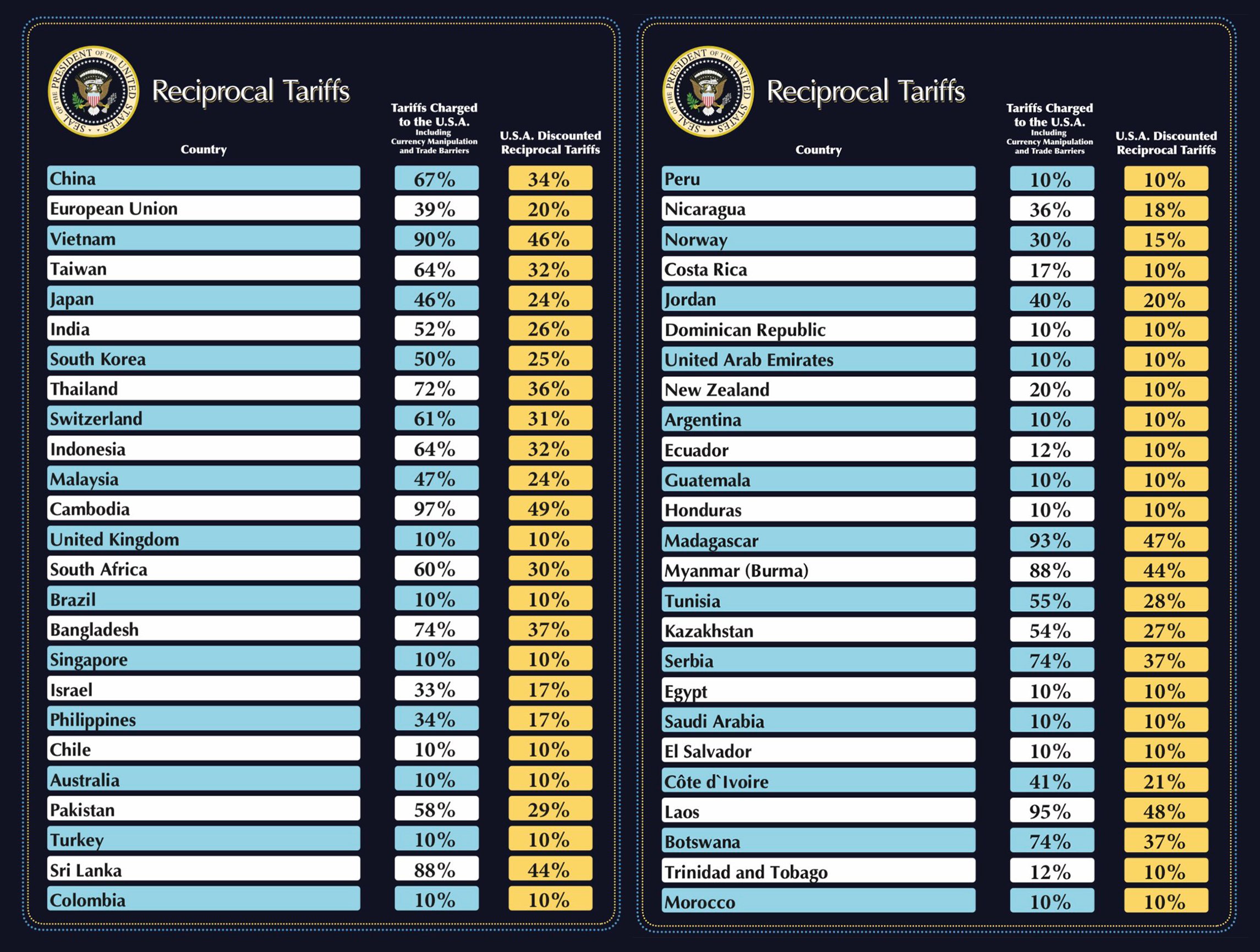
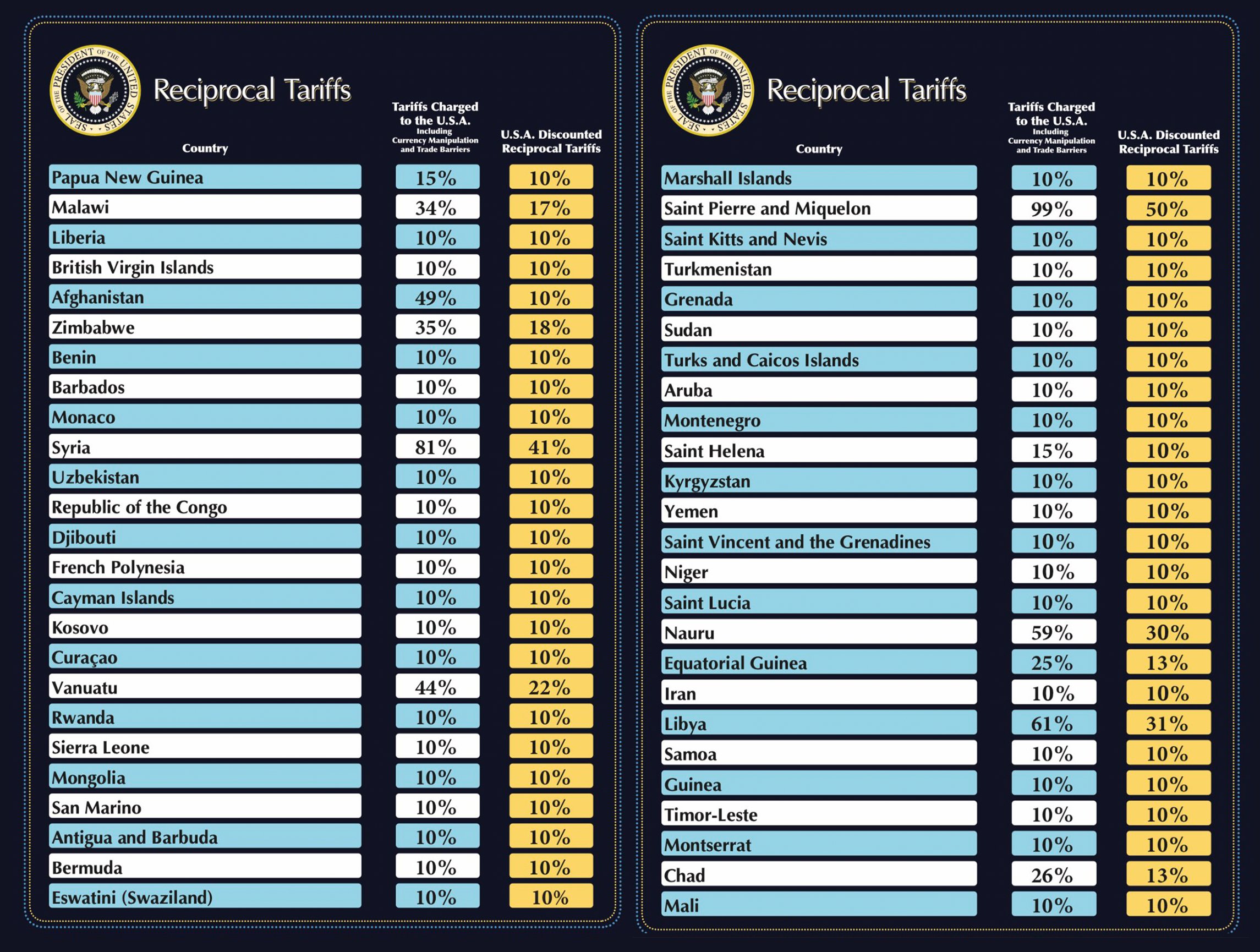
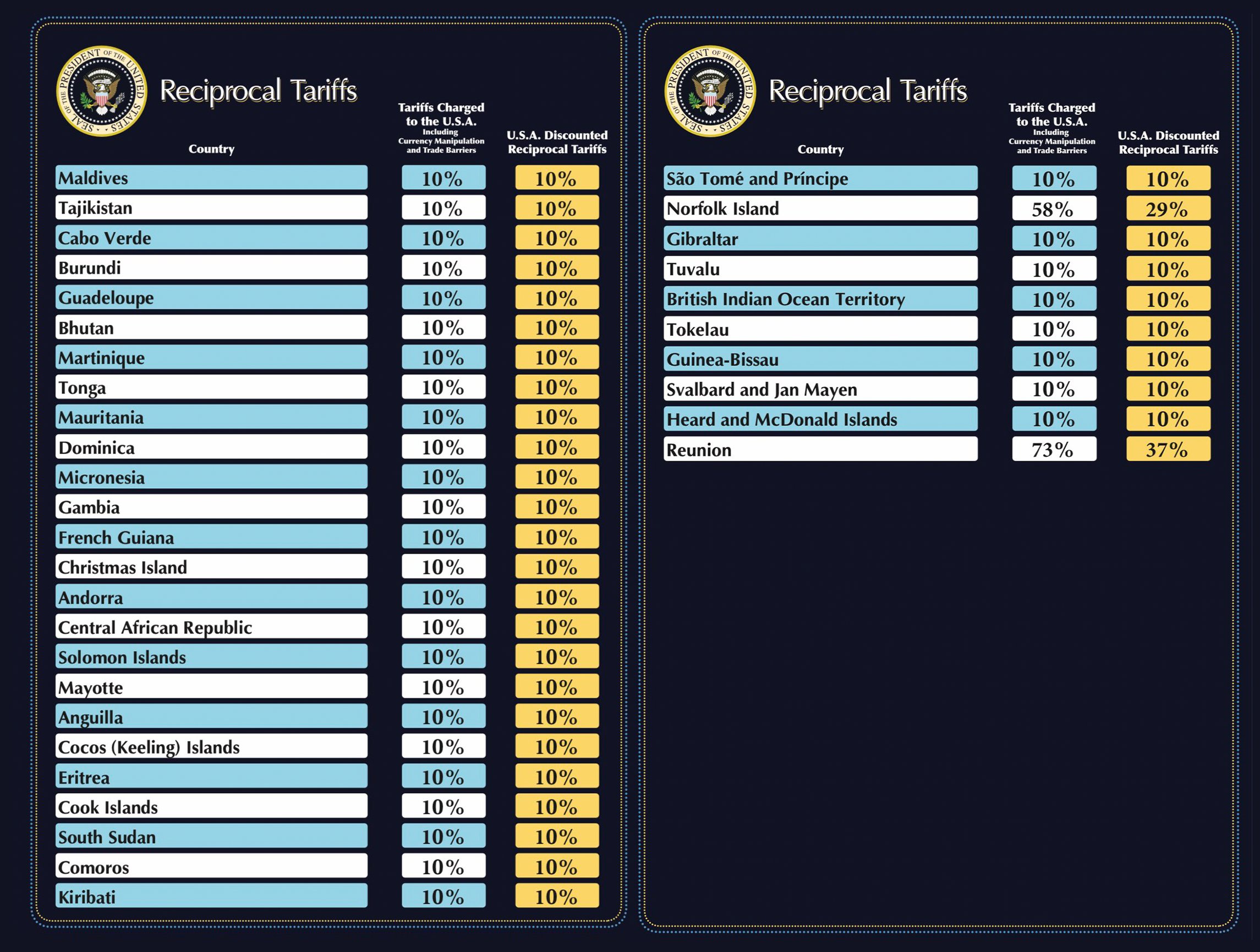
Other measures
Eliminate the "de minimis" tax exemption for packages worth less than $800 from China and Hong Kong to prevent Chinese e-commerce companies from exploiting the loophole.
Impact and reaction
These tariff measures could have a profound impact on global trade, and many countries have expressed opposition and are considering countermeasures.
Information sheet on Taiwan’s imported high-tariff products
| Product Category | country of origin | Tariffs or tax rates | Remark |
|---|---|---|---|
| beer | Chinese mainland | 13.13%~64.14% | Temporary anti-dumping duties will be levied on Chinese-made beer starting from July 2025 |
| Hot rolled steel products (flat rolled steel products) | Chinese mainland | 16.9%~20.15% | Different anti-dumping tax rates are levied on different exporting manufacturers. |
| milk powder | worldwide | About 15%~20% | Highly protective agricultural products |
| Meat (pig, beef) | worldwide | About 10%~20% | Depends on importing country and part |
| Rice | worldwide | More than 35% | One of the highly protected crops |
| Complete vehicle (car) | Non-FTA signatory countries | About 17.5% | Applicable to those who have no FTA agreement with Europe and the United States |
| Tobacco and alcohol | worldwide | 30%~70% (including special tax) | Additional health tax and tobacco and alcohol tax |
Verifiable source website
- Taiwan Ministry of Finance official website
- Customs Department Tariff Inquiry System
- International Trade Administration, Ministry of Economic Affairs
- World Journal: Report on China’s imposition of anti-dumping duties on beer
- Central News Agency: Explanation of anti-dumping duties on China’s steel products and beer
poll tax
definition
A poll tax is a form of tax levied on population, with everyone paying the same amount regardless of income, property or consumption. This type of tax system is considered one of the simplest forms of taxation.
History
- Ancient times:In China, Europe and other places, poll taxes are often used to collect funds for war or infrastructure.
- Medieval England:The introduction of a poll tax in the 14th century led to a massive peasant uprising (Watt Taylor's Rebellion of 1381).
- Modern times:Some countries still use poll tax as a governance and financial tool when conducting censuses or ruling colonies.
feature
- Fixed tax amount:Everyone, rich or poor, has to pay the same amount.
- Collection is simple:Calculated based on population, management and execution are easy.
- Fair dispute:Because it ignores individuals' ability to pay, it is often criticized for increasing the burden on the poor.
The relationship between corvee and poll tax
In ancient society,corvee(such as building city walls, transporting grain and grass, and river management) is also a form of head tax. Its essence isPay taxes with labor instead of money, usually allocating labor obligations according to the number of people:
- Qin and Han Dynasties:Adult men are required to perform military service or corvee for a certain number of days each year.
- Tang and Song Dynasties:The corvee system went hand in hand with the poll tax, and later it was gradually changed to a monetary deduction (service deduction).
- Influence:Both corvées and poll taxes increased the financial burden on families having children, because each additional child meant additional labor or taxes.
Advantages and Disadvantages
- advantage:Collection is transparent, implementation is simple, and taxation is highly predictable.
- shortcoming:It does not take into account income differences, puts heavy pressure on low-income groups, and is often regarded as a "regressive tax."
- Demographic impact:Poll taxes and corvee have increased the cost of raising children, burdening population growth. They may suppress the birth rate in the long term and even form a ceiling for national population growth in some eras.
modern applications
- Most countries have abolished traditional poll taxes and corvees and turned to income tax, consumption tax and public service tax systems.
- Deformed forms still exist in some areas, such asSocial insurance fixed amount fee, or the "capitation fee" for foreign workers.
- Some policies in Singapore charge a fixed head tax (Foreign Worker Levy) to foreign workers.
Historical case supplement
- The population of the Song Dynasty exploded:During the Song Dynasty, poll taxes and corvee were gradually reduced or even weakened, which reduced the burden on families and made it cheaper for people to have children. This is one of the important reasons why the population of the Song Dynasty increased rapidly from about 50 million at the end of the Tang Dynasty to more than 100 million during the Southern Song Dynasty.
- Demographic and fiscal interaction:When the pressure of poll tax and corvee is high, people may reduce their fertility, causing the country's population to stagnate; when it is reduced or abolished, it may promote population reproduction and accelerate social and economic vitality.
Labor force population and employment rate
working population
The working population refers to all people within a specific age range who are willing and able to engage in economic activities. The labor force includes the employed and the unemployed, usually aged 15 and over, and excludes academics, retirees and those not looking for work.
Employment rate
The employment rate measures the proportion of the labor force that is actually engaged in paid work or self-employment. This data can reflect the economic vitality and labor market conditions of a country or region.
Factors affecting labor force population and employment rate
The labor force and employment rate are affected by many factors, such as population structure, economic development level, industrial structure and social policies. These factors jointly determine the employment situation and economic stability of a country or region.
Examples of Labor Statistics Indicators
| index | explain |
|---|---|
| labor force participation rate | Proportion of people aged 15 and above participating in or looking for work |
| unemployment rate | The proportion of the working population that has not found a job |
| Employment rate | Proportion of actual employed persons in the labor force |
| youth unemployment rate | Usually refers to the proportion of people aged 15 to 24 who are unemployed |
| long term unemployment rate | Proportion of unemployment lasting six months or more |
gap between rich and poor
Key indicators of wealth gap
The gap between rich and poor can be measured through a variety of indicators to describe the distribution of income or wealth in society. The following are common indicators of wealth inequality:
- Gini coefficient:The Gini coefficient is a value between 0 and 1 that measures the inequality of income or wealth distribution. The closer the value is to 1, the larger the gap; the closer the value is to 0, the smaller the gap is.
- Income quantile ratio:This indicator describes the degree of difference in income distribution by comparing the income ratio of high-income groups to low-income groups, such as the income ratio of the top 10% and the bottom 10%.
- Human Development Index (HDI):Although HDI is mainly used to measure a country's human development level, it indirectly reflects the degree of income inequality in a country by integrating factors such as income, education, and life expectancy.
- Labor income share:This indicator measures a country's labor income as a share of its total income and is often used to explore the gap between worker income and capital income.
The impact of the gap between rich and poor on the country
An excessive gap between rich and poor may have a profound impact on national development. These impacts include social, economic, political and other aspects:
- Social instability:An excessive gap between rich and poor may cause social dissatisfaction and increase the risk of crime, protests and social unrest.
- Economic growth slows:Income inequality will limit the consumption ability of low-income groups, leading to insufficient domestic demand and thus inhibiting economic growth.
- Reduced educational and health opportunities:The gap between rich and poor often means uneven distribution of education and medical resources, which affects the long-term development of society and the quality of citizens.
- Weakening social cohesion:Excessive income gaps may lead to the solidification of social classes, weaken public trust in the government and social systems, and affect overall social harmony.
Measures to address the gap between rich and poor
In response to the gap between rich and poor, countries can take some measures to alleviate inequality:
- Adjust tax policies:Increase taxes on high-income earners and redistribute wealth to lower-income groups through progressive taxation and capital gains taxes.
- Strengthen social security:Improve the living security of low-income people by improving social security systems such as medical care, education and pensions.
- Improve equality of educational resources:Provide fair educational opportunities and enhance the development potential of the lower classes in society.
Matthew effect
Definition and Origin
The Matthew Effect refers to a phenomenon in which "the strong get stronger and the weak get weaker". Its name comes from a passage in the Gospel of Matthew in the Bible: "To everyone who has, more will be given, and he will have an abundance; and whoever does not have, even what he has will be taken away." This reflects the common phenomenon of cumulative advantage in society, that is, an initial small lead will turn into a huge gap over time.
Cumulative Advantages in Sociology and Science
Sociologist Robert K. Merton first introduced this concept into academia to describe the distribution of prestige in the scientific community. Famous scientists often receive more research resources and attention, even if their contributions are similar to those of new researchers. This mechanism results in:
- Fame concentration:The same research results will be taken more seriously if they come from famous people than if they come from unknown people.
- Resource tilt:Funds and talent tend to flow to teams that already have a record of success, resulting in self-reinforcement of research capabilities.
- Quotation error:In academic papers, documents that have been cited frequently are more likely to be cited again by subsequent researchers.
Concentration of wealth in business and the economy
In the business world, the Matthew Effect is the main driver of market monopoly and the gap between rich and poor. This is highly related to the "Pareto Principle" (80/20 rule):
- market share:Leading companies have higher brand recognition and economies of scale, and can provide better services at lower costs, thus swallowing up the living space of more small businesses.
- Network effects:In social media or e-commerce platforms, the more users the platform has, the more attractive it becomes, ultimately leading to a "winner takes all" situation in the market.
- Compound interest effect:In financial investment, those with strong capital can take more risks and obtain diversified returns, and their assets grow much faster than those who can only rely on labor to obtain compensation.
Chain Reactions in Education and Psychology
Psychologist Keith Stanovich proposed the "Matthew Effect in Reading." He found that children with strong early reading ability will read more because of the sense of achievement that reading brings, thereby expanding their vocabulary and cognitive abilities; conversely, children who are lagging behind in the early stages will escape due to frustration, causing the gap with their peers to expand exponentially.
How to deal with the Matthew Effect
Although the Matthew effect is an inevitable product of natural competition, excessive imbalance can lead to system rigidity. The following are common coping mechanisms:
| level | coping strategies | Purpose |
|---|---|---|
| government policy | Progressive tax system, antitrust law, social welfare | Mandatory resource reallocation to avoid class solidification. |
| business management | Differentiated competition, disruptive innovation | Establish new rules in vertical areas ignored by giants and bypass the war of scale. |
| personal development | Deliberate practice and building core competitiveness | Strive to enter the starting point of the positive cycle and accumulate the initial original capital. |
In summary, the Matthew Effect reveals the huge impact of initial conditions on long-term outcomes. Whether in investment, study or career planning, crossing the "critical point" as early as possible and entering a positive growth track is a key strategy to avoid being shuffled by the market.
poverty rate
Poverty rate is a measure of the proportion of people in a country or region whose income is below a specific threshold (poverty line) to the total population. It is a core indicator for assessing social and economic health, the gap between rich and poor, and the effectiveness of social welfare policies.
measure of poverty
| Indicator type | Definitions and Benchmarks | Scope of application |
|---|---|---|
| Absolute Poverty | The minimum resources needed to survive. The World Bank currently uses a daily income of US$2.15 (2017 purchasing power parity) as the international poverty line. | Mostly used in developing countries or extreme poverty research. |
| Relative Poverty | Income is less than 50% or 60% of the country’s median income. This reflects the level of inequality within society. | It is mostly used in developed countries (such as OECD countries) to measure social marginalization. |
| Multidimensional Poverty | In addition to income, indicators such as education, health, and quality of life (water, electricity, and sanitation) are also included. | The United Nations Development Program (UNDP) is used to measure the substantive state of life. |
Key factors affecting poverty rates
- Economic structure:Industrial transformation leads to the unemployment of low-skilled workers, or the emergence of "working poor" in the labor market.
- Education level:Uneven educational opportunities lead to class solidification and poverty is passed on from generation to generation.
- Demographic structure: Decreasing birth rateAs aging leads to an increase in the dependency ratio, the risk of poverty in single-parent families or elderly people living alone is significantly higher.
- Social security system:Coverage rates of secondary distribution of taxes, minimum wage regulations and social welfare subsidies.
Analysis of current situation in specific areas
- Taiwan:The official poverty rate (the proportion of low-income households) has remained around 1.5% for a long time, but when measured by relative poverty (median 60%), the proportion is significantly higher, reflecting the problem of "marginal households".
- Japan:The relative poverty rate is about 15%. In particular, the poverty issues of "single-parent female families" and "seniors" are often the focus of debate in the House of Representatives.
- South Korea:The elderly poverty rate ranks at the bottom among OECD countries, which is closely related to South Korea’s rapid birthrate decline and the collapse of traditional support concepts.
The vicious cycle of poverty and low birthrate
An increase in the poverty rate will directly inhibit the desire to have children, because the cost of childcare has become an unbearable burden for families; and the decline in birthrates will lead to a reduction in the future labor force and social insurance to make ends meet, further weakening the country's ability to fight poverty through welfare policies. This has become a double dilemma that modern governments must address simultaneously when formulating policies.
Taiwan poverty rate
There is a significant gap between Taiwan's poverty rate, "official data is low" and "people's perception is high." This is mainly due to the fact that the definition of domestic laws and regulations is different from the internationally accepted relative poverty standards, which leads to the problem of excessively strict wealth exclusion clauses or insufficient coverage of social assistance at the implementation level of the policy.
Data comparison between different units and standards
| statistical benchmark | Data source | Estimated value/characteristic | Statistical errors and limitations |
|---|---|---|---|
| Legal poverty rate (low income/low-middle income) | Ministry of Health and Welfare | About 1.3% - 2.5% | The biggest error. Restricted by "virtual income", "consolidation of household assets" and "location threshold", a large number of people near poverty are excluded. |
| Relative poverty rate (median 60%) | International standards (OECD/EU) | About 7% - 12% (depending on calculation caliber) | More reflective of social inequality. The Audit Office has repeatedly reminded the government that there is a huge gap between this data and the number of official aid recipients. |
| Audit Office Assessment Data | Audit Department of the Control Yuan | Emphasis on the "black number" issue | It is pointed out that there are about hundreds of thousands of "marginal households" who cannot be included in the social assistance system due to real estate or household registration factors. |
Main sources of statistical errors: virtual income and wealth exclusion logic
- Virtual income mechanism:When the Ministry of Health and Welfare is reviewing, if the applicant is able to work, even if he is unemployed, his income will be calculated as "basic salary". As a result, those who actually have no income will not be able to meet the standard due to "increased income".
- Real estate value estimate:The poverty line assessment includes land and home values. With housing prices soaring, many disadvantaged families have lost their eligibility for assistance because they hold ancestral properties or old houses, resulting in excessive assets.
- Household accounting issues:The law compels the calculation of the income of relatives (such as children with whom they have no contact), which causes serious statistical errors and aid gaps in modern estranged family relationships.
Impact on policy implementation and wealth exclusion clauses
1. The rigid harm caused by wealth exclusion clauses
Due to the "absolute poverty" mentality adopted by the government, the rich exclusion clauses in the policy are extremely stringent. This results in the "near poor" facing the pressure of inflation or low birthrate and being unable to obtain tuition exemptions or living subsidies because they do not meet the low-income qualifications, creating a phenomenon where "the poor can survive but the marginalized have a hard time".
2. Distortion of social welfare distribution
- Resource allocation out of focus:If relevant units prepare budgets based only on the 1.3% data from the Ministry of Health and Welfare, they will ignore the remaining 10% of the relatively poor population, resulting in insufficient coverage of policies such as long-term care and child care subsidies.
- Subsidy cliff:When low-income households leave the threshold due to a slight salary increase, they will immediately lose all benefits, leading to a decrease in willingness to work (poverty trap). This is why the Audit Office has repeatedly suggested that the standards for eliminating wealth should be relaxed in stages.
3. Impact on the low birthrate policy
Although the current childcare subsidy has been gradually eliminated to eliminate wealth, other related benefits (such as rent subsidies and education subsidies) are still limited by the aforementioned statistical deviations. When the majority of people in society are classified as "non-poor" but have real difficulties in living, the high opportunity cost of childbearing becomes the main reason for the irreversible decline in the birthrate.
The audit office and the Ministry of Health and Welfare have opposing views
In recent years, the Audit Department has repeatedly mentioned in audit reports that the Ministry of Health and Welfare should "review the definition of poverty line," believing that the current Social Assistance Law is out of touch with reality. The Ministry of Health and Welfare considers the financial burden and moral hazard and takes a conservative attitude towards relaxing the threshold. This results in Taiwan's lack of accurate data navigation when dealing with extreme inequality and the crisis of low birthrate.
M1 M2 money supply
What are M1 and M2?
M1 and M2 are indicators of the money supply that measure the amount of money circulating in a country's market. M1 generally refers to money available in the short term, while M2 includes M1 and extends to some time deposits, providing an indicator of the wider money supply in the market.
Definition of M1
M1 is the narrow money supply, including cash (notes and coins) and demand deposits. This part of the funds can be used at any time and is the main source of consumption and daily transactions. Increases and decreases in the value of M1 generally reflect changes in consumer spending and corporate short-term funding needs.
Definition of M2
M2 is the broad money supply, which in addition to M1, also includes time deposits, money market funds, etc. Although these funds are not immediately available, they can be converted into disposable funds relatively quickly. M2 more comprehensively reflects the liquidity of funds in the market and is a key indicator affecting medium-term investment.
The impact of M1 and M2 on the economy
- Impact on consumption and investment:When M1 increases, consumers and businesses have more disposable funds, and their willingness to consume and invest increases, which helps economic growth. An increase in M2 indicates ample market capital and strong demand for bank loans, which is conducive to long-term investment.
- Reflects market liquidity:The growth rate of M1 and M2 affects the liquidity of market funds. If the growth rate is too fast, it may lead to inflation, while if the growth rate is too slow, it may indicate a lack of economic vitality.
- Monetary policy adjustment indicators:The central bank will adjust monetary policies such as interest rates or quantitative easing based on changes in M1 and M2. When M1 grows too fast, the central bank may raise interest rates to curb inflation; when M2 growth slows, it may cut interest rates to stimulate lending and consumption.
The relationship between M1, M2 and economic cycle
During periods of economic prosperity, M1 and M2 tend to grow faster, indicating that market liquidity is sufficient, consumption and investment increase, and promote economic expansion. During an economic recession, the growth rate of M1 and M2 declines, capital liquidity decreases, and consumption and investment shrink. The central bank may need to release more funds to stabilize the economy.
Monitoring significance of M1 and M2
The central bank and investors will closely monitor changes in M1 and M2 to determine economic trends and market risks. Data changes in M1 and M2 provide policymakers with real-time economic health indicators, allowing them to formulate corresponding economic policies more accurately.
Latest data for US M1 and M2
- U.S. Federal Reserve Economic Database (FRED): M1 Money Stock
- U.S. Federal Reserve Economic Database (FRED): M2 Money Stock
- TradingView: M1 Money Stock Historical Chart
- TradingView: M2 Money Stock Historical Chart
- MacroMicro: US M2 Money Supply Chart
M1 and M2 data for other countries
If you are concerned about M1 and M2 data in other countries, the following websites provide relevant information:
- Li Xingren: Mainland China’s M0, M1, M2 money supply data
- MacroMicro: Taiwan M1B and M2 Money Supply Chart
PMI Index
What is PMI?
PMI (Purchasing Managers' Index, Purchasing Managers' Index) is an economic indicator that measures the health of the economy in the manufacturing or service industries. It surveys corporate purchasing managers to collect data on business activities, including production, new orders, supplier delivery times, inventories and employment.
How PMI is calculated
PMI is calculated based on respondents' responses to each survey item, and the results are expressed numerically:
- Greater than 50:indicates that the industry is expanding.
- Equal to 50:said the industry remains unchanged.
- Less than 50:indicates that the industry is shrinking.
Component indicators of PMI
PMI usually includes the following main components:
- New orders index:Reflect changes in market demand.
- Production Index:Shows the level of production activity in the factory.
- Employment Index:Indicates the company's recruitment status.
- Supplier delivery time index:Measuring supply chain efficiency.
- Inventory index:Shows changes in business inventory.
Applications of PMI
PMI is an important reference indicator used by governments, businesses and investors to analyze economic conditions. Its main applications are as follows:
- Economic Trend Forecast:PMI is a leading indicator of economic activity and can reflect economic trends in advance.
- Monetary policy reference:The central bank can adjust interest rates or other policy tools based on PMI data.
- Investment decision guidance:Investors use PMI data to assess the health of the industry and adjust investment strategies.
in conclusion
As a comprehensive economic indicator, PMI can quickly and accurately reflect changes in economic status, providing important decision-making basis for policymakers, corporate management and investors.
CPI
What is CPI?
CPI (Consumer Price Index) is an indicator that measures the price changes of a basket of goods and services. It is used to reflect changes in consumers' cost of living and serves as an important indicator of inflation.
How CPI is calculated
CPI is calculated by comparing price changes for a fixed set of goods and services over a specific period. The formula is:
CPI = (current price / base period price) × 100
If the CPI rises, it means prices are rising; if the CPI falls, it means prices are falling.
Classification of CPI
- Overall CPI:Includes price changes for all goods and services, such as food, energy, health care, and transportation.
- Core CPI:Food and energy, which have large price fluctuations, are excluded and used to analyze long-term inflation trends.
What is CPI used for?
- Assess inflation or deflation.
- Adjust wages, social benefits and pensions to maintain purchasing power.
- As a reference indicator for monetary policy, it helps the central bank decide to adjust interest rates.
CPI and economic impact
When the CPI continues to rise, it may indicate inflationary pressure, prompting the central bank to raise interest rates to curb prices; conversely, if the CPI is too low or falling, it may reflect the risk of economic recession, requiring interest rate cuts or stimulus measures to promote growth.
most favored nation treatment
basic definition
Most-favored-nation treatment refers to the preferential trade conditions a country provides to a certain country in foreign economic and trade, which must be equivalent to the best treatment it provides to any other country. This is a "non-discriminatory" clause intended to ensure a fair trading environment.
core content
(1) Tariff preferences
When a country is granted MFN status, the lowest tariff rate applies to its imported goods. For example, if a country provides tariff reductions and exemptions to other countries on a certain product, the country that enjoys most-favored-nation status will also receive the same tax rate.
(2) Non-tariff measures
Including import quotas, inspection and quarantine, technical standards, etc., the same policies and conditions as other countries will be given.
(3) Reduction of trade barriers
Reduce trade restrictions on most-favored nations, such as eliminating import bans and relaxing trade licenses.
(4) Principle of non-discrimination
Most-favored-nation status is intended to prevent discriminatory trade practices. A country cannot impose unfair restrictions or special treatment when trading with a certain country.
Scope of application
(1) Bilateral agreement
The two countries can grant each other most-favored-nation status through bilateral trade agreements to promote equality in bilateral trade.
(2) Multilateral trading system
Within the framework of the World Trade Organization (WTO), most-favored-nation treatment is a basic obligation among member states. WTO stipulates that all members must provide most-favored-nation treatment to other member states to ensure fairness and stability in global trade.
Exceptions
Most-favored-nation treatment is not absolutely applicable, and there are some exceptions in international trade:
- Free trade areas and customs unions:Member states can grant each other higher preferential treatment without extending it to other countries.
- Anti-dumping and countervailing:For unfair trade practices, a country can take countermeasures without applying most-favored-nation treatment.
- Special offers:Such as the Generalized System of Preferences (GSP) provided to developing countries.
importance
Most-favored-nation treatment aims to promote stability and fairness in international trade, avoid trade discrimination between countries, and promote global economic integration. It is the cornerstone of the modern multilateral trading system and also plays an important role in bilateral and multilateral trade agreements.
Summarize
Through most-favored-nation treatment, countries can participate in international trade on a more equal basis, lower trade barriers, and enhance the interconnectedness and cooperation of the international economy.
credit card default rate
definition
Credit card default rate refers to the proportion of cardholders who fail to repay the minimum payment amount within a certain period of time. This metric is commonly used to assess credit card risk and the asset health of financial institutions.
Influencing factors
- Economic conditions: An economic downturn can lead to an increase in default rates.
- Personal Income: Declining or unstable income increases the risk of default.
- Interest rate changes: Higher interest rates may increase the repayment pressure of cardholders.
- Financial education: Lack of proper financial knowledge can lead to overspending.
Monitoring methods
Financial institutions typically monitor default rates through the following methods:
- Default rate data is compiled on a monthly or quarterly basis.
- Analyze the repayment behavior of different customer groups.
- Use data models to predict future default risk.
Strategies to Reduce Default Rates
- Offer more flexible repayment plans, such as installment options.
- Strengthen credit review to ensure the repayment ability of credit recipients.
- Improve cardholders’ financial knowledge and encourage rational consumption.
- Proactively contact cardholders who are about to default and provide solutions.
